
The adoption of CBDCs in the region depend on their value-added for business and end-users and the support from banks and payment service providers
Financial technology applications need to go beyond payments systems to provide a wide array of services, from lending to insurance, to new and existing banking customers
With the emergence of Bitcoin and other decentralized crypto-currency and central bank digital money, governments must now act like strategic oligopolists.
A look at the sources of the severe and and still growing financial imbalances between the US and China and the geopolitical and geo-economic tensions they have caused.
Another ministerial conference is approaching later this year and, with a new director-general at the helm, there are hopes for a revival in the global body’s fortunes.
Governments are preparing for huge Covid-19-related spending that could lead to vast wastage. That can be prevented, argues Bryane Michael of The University of Hong Kong.
Such interventions only serve to worsen wealth inequality and, as a result, could fuel anti-globalization sentiment.
The US-China trade dispute is much more than a battle over a US$420 billion deficit, what the tensions are really about is a race for “geo-technological” superiority.
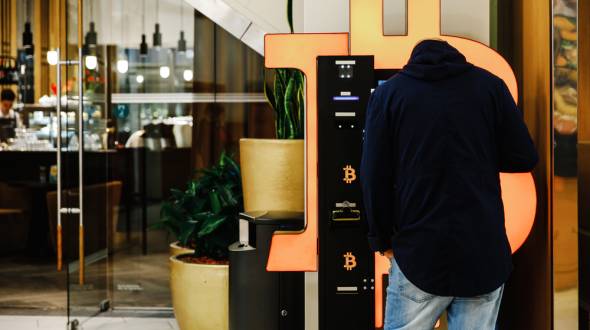
Although cryptocurrencies have been around for about a decade, it was no more than three or four years ago that regulators began to feel intense pressure to catch up.
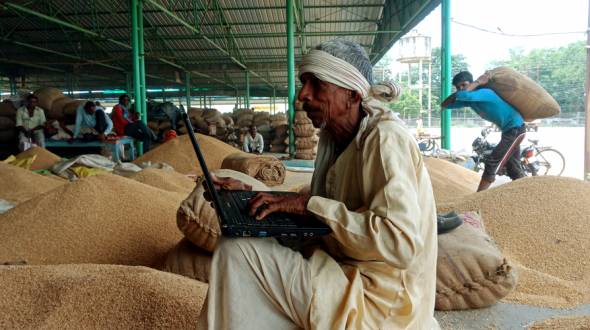
China’s international agriculture investments represent more than a quest for food security.
With the process for selecting a new managing director of the International Monetary Fund (IMF) starting, Vasuki Shastry, who worked in senior communications and public affairs roles at the organization, argues that Asian countries should overcome their traditional reluctance and geopolitical impediments and differences to support a candidate from the region.
The rise in trade tensions between the US and China may be due to the American side’s failure to appreciate the implications of China’s not being a rule-of-law country – that administrative action, not laws on the books, get things done in China, writes Zhiwu Chen, Director of the Asia Global Institute (AGI) and Victor and William Fung Professor in Economics at the University of Hong Kong (HKU).
The extreme volatility of cryptocurrencies in 2018—which saw the most widely traded cryptocurrency, Bitcoin, plunge from US$10,166 in January to US$3690 in December—made even the most bullish traders recoil from their terminals. However, one sub-sector of the nascent asset class defied the trend: stablecoins.
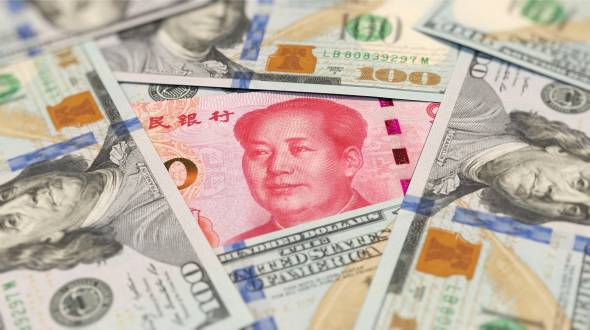
Just a few years ago, the renminbi seemed destined to become one of the world’s most significant currencies. However, its attractiveness has plunged as international investors seek currencies with legal security, ease of use and, critically, unrestricted convertibility.
The internet has taken much of the human interaction out of international trade. But many commercial buyers continue to emphasize face-to-face communication with sellers.
China has often been accused of practicing “debt-trap diplomacy”—miring supposed partners, particularly developing countries, in unsustainable debt-based relationships. But this is a misreading of the issue, and nowhere is this more apparent than in China’s dealings with Venezuela.
Corruption has long been a prominent problem in the Asia-Pacific, but many countries have seemingly lacked the will to combat it. Until measures are enacted to increase transparency and accountability in governance, corruption will continue to gnaw away at economic gains.
China’s Belt and Road Initiative seems to focus on connections with Africa, Central Asia, and Eastern Europe. But the country’s economic future is really in “netware” technology, similar to America’s. Contrary to how BRI is viewed and talked about now, China’s more profitable path actually points, as illuminated by the likes of Alibaba and Tencent, eastward to California.
Asia Global Institute
The University of Hong Kong
Room 326-348, Main Building
Pokfulam, Hong Kong
asiaglobalonline@hku.hk
+852 3917 1297
+852 3917 1277
©2026 AsiaGlobal Online Journal
All rights reserved. Terms of Use - Privacy Policy.
Opinions expressed in pieces published by AsiaGlobal Online reflect those of the authors and do not necessarily represent the views of AsiaGlobal Online or the Asia Global Institute.
The publication of AsiaGlobal Voices summaries does not indicate any endorsement by the Asia Global Institute or AsiaGlobal Online of the opinions expressed in them.

Check out here for more research and analysis from Asian perspectives.