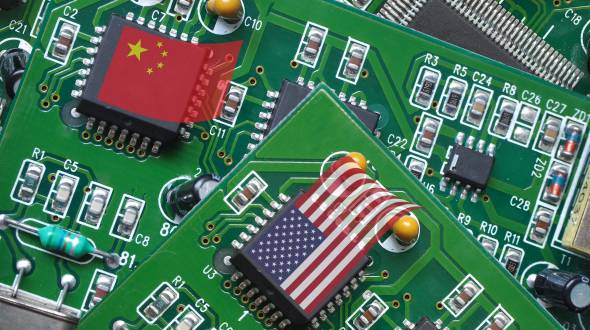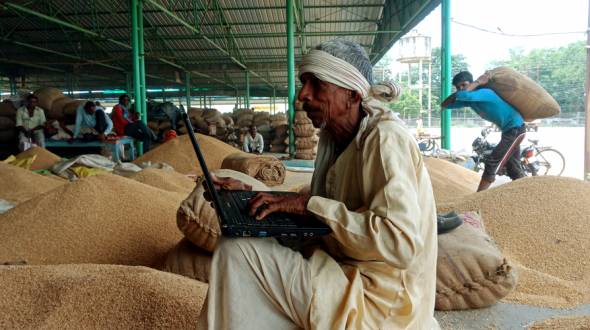

The US and China should consider how collaborating on technology, particularly in helping the Global South, will yield more benefits than a zero-sum race to decouple
Amid the China-US strategic competition, Southeast Asian economies find room for maneuver as they aim to use technology to fuel growth and productivity
While China and ASEAN are each other’s largest trading partner, they have not reached an agreement to liberalize cross-border data flows essential for digital commerce
The global implications of the US-China decoupling dispute over technology would be better understood using big-data analytics and artificial intelligence
Hong Kong must implement its Northern Metropolis Development Strategy to dovetail with the mainland’s Greater Bay Area initiative.
The prospect for building a global architecture for cross-border data flows anytime soon is very limited.
Key economies must focus on regional integration and promoting greater collaboration in the necessary governance to address pressing global challenges.
What would the metaverse – an interconnected network of virtual spaces – look like in a geopolitically fragmented world?
Beijing’s moves will intensify the already heated China-US strategic rivalry.
Data commercialization could improve total factor productivity and tackle political, economic and social challenges resulting from the slowdown of growth.
Financial technology applications need to go beyond payments systems to provide a wide array of services, from lending to insurance, to new and existing banking customers
With the emergence of Bitcoin and other decentralized crypto-currency and central bank digital money, governments must now act like strategic oligopolists.
Assessing the enormous challenges for the world’s two biggest economies as they focus on shoring up their global competitiveness.
Pandemic preparedness should include a range of digital health capabilities with a view to minimizing the digital divide.
Washington hopes such a deal would be a powerful counterweight to China’s efforts to impose its own digital standards in the region.
Drawing on its own experience and lessons from other nations, China could portray the circular economy as a future-proof, carbon-neutral economic development model.
Dividing data into jurisdictional compartments and potentially data storage centers and the internet, too, would be a regressive move.
China should explore more holistic solutions as it seeks to manage the social impact of ubiquitous technological innovation.
Asia Global Institute
The University of Hong Kong
Room 326-348, Main Building
Pokfulam, Hong Kong
asiaglobalonline@hku.hk
+852 3917 1297
+852 3917 1277
©2026 AsiaGlobal Online Journal
All rights reserved. Terms of Use - Privacy Policy.
Opinions expressed in pieces published by AsiaGlobal Online reflect those of the authors and do not necessarily represent the views of AsiaGlobal Online or the Asia Global Institute.
The publication of AsiaGlobal Voices summaries does not indicate any endorsement by the Asia Global Institute or AsiaGlobal Online of the opinions expressed in them.

Check out here for more research and analysis from Asian perspectives.